There are many different farrowing systems now available. Choosing the best system for the pigs, the farmer and other stakeholders can be challenging. But understanding how the pen functions is an important first step to making good decisions for the main occupants (the animals) and the staff working with them.
Researchers from SEGES Innovation, SRUC and Newcastle University have been developing design criteria for successful free farrowing and loose lactation pens and have put together a set of 30 questions about the way in which the farrowing pen functions. Working through this set of questions before you build can help you make good decisions to optimise functionality.
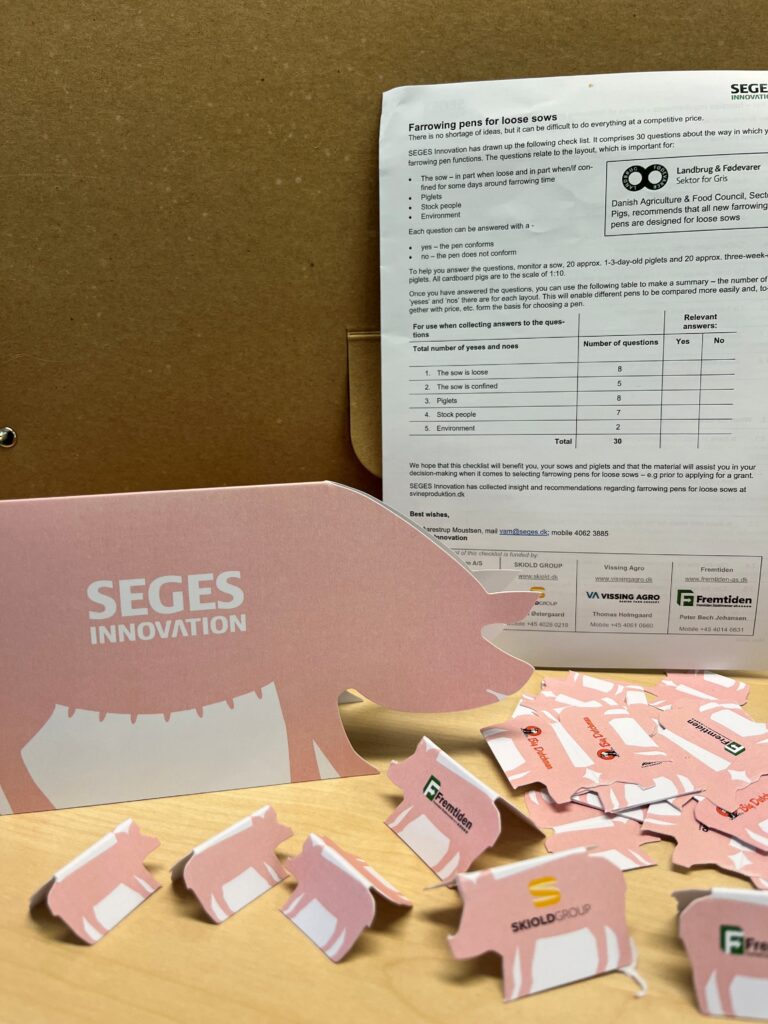
The questions relate to the layout, which is important for the:
- Sow*
- Piglets
- Stock people
- Environment
*The checklist recognises that some designs are intended for full free farrowing (i.e. zero-confinement) and some have a temporary crating option. Therefore questions that concern the sow are specific for when she is loose and when she is confined.
Each question can be answered with a –
- Yes – the pen conforms
- No – the pen does not conform
Before answering the questions you need to consider the basic dimensions of the main occupants of the pen – the sow and her piglets – and follow these principles:
- Always design for the largest sows.
- Always design for the largest litter at weaning.
Designing for your largest sows and largest litters
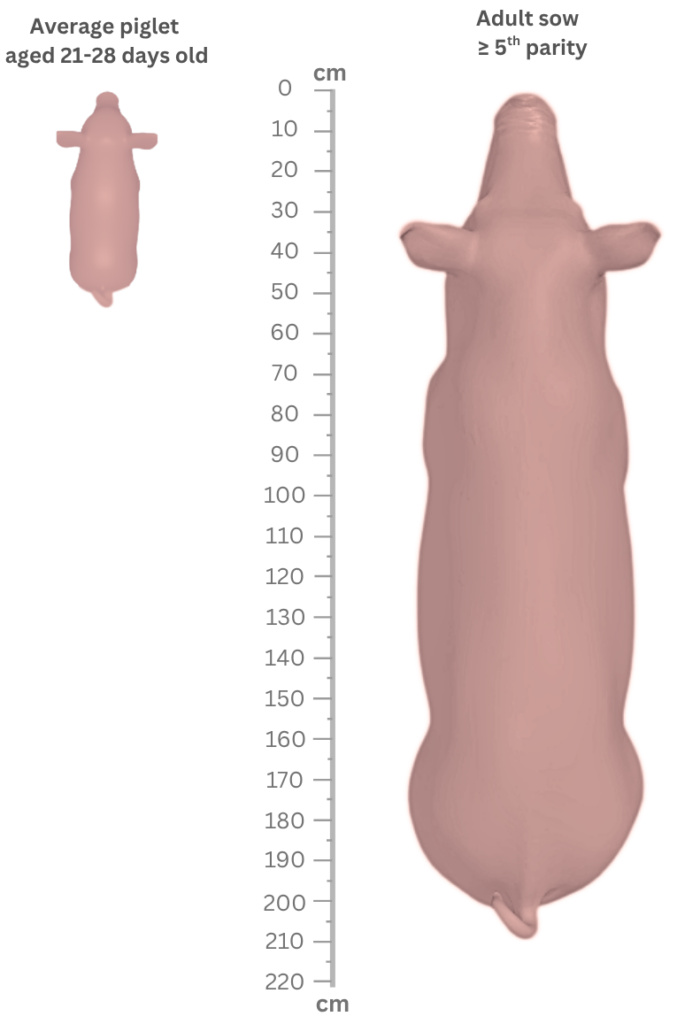
The latest research evidence suggests the largest sows (i.e. those of highest parity or those above the 95th percentile of the cohorts measured) are over 2 metres long. When standing they are almost 1 metre tall, and over half a metre wide. When lying down they can be almost three quarters of a metre deep.
Modern hyperprolific sows can produce very large litters (18-25 liveborn piglets). Sows have 14-16 functional teats so could rear as many as 16 piglets up until weaning (i.e. 28 days). Research measuring typical 7kg piglets between 21-28 days old, showed that piglets are 0.53-0.56m long, and about 0.14m tall.
Draw your pen
Now you have the dimensions – draw out a simple pen (length and width) and start adding the pen features you need. Work through the questions and score your design.
For more information about what features are important for sow and piglet welfare visit our Why Free Farrowing? page.
There are also top level decisions that should be considered and our ‘Free Farrowing Checklist‘ page has been updated to help navigate a roadmap from crates to free farrowing.